For US Healthcare Professionals
Additional RWE studies evaluating the risks patients with HK may face

Patients with HK are likely to experience future recurrences1
In an RWE study of patients with hyperkalemia and Stage 3 or 4 CKD, the percentage of patients with HK recurrence* following an MNT visit increased in those with prior recurrence and the average time between each recurrence decreased.
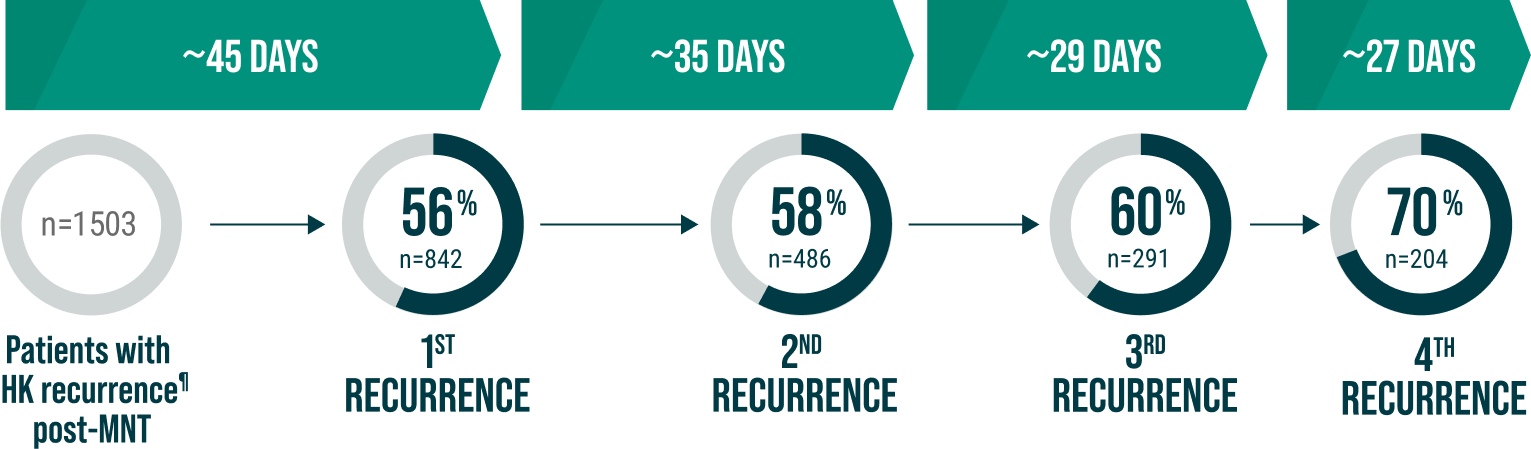
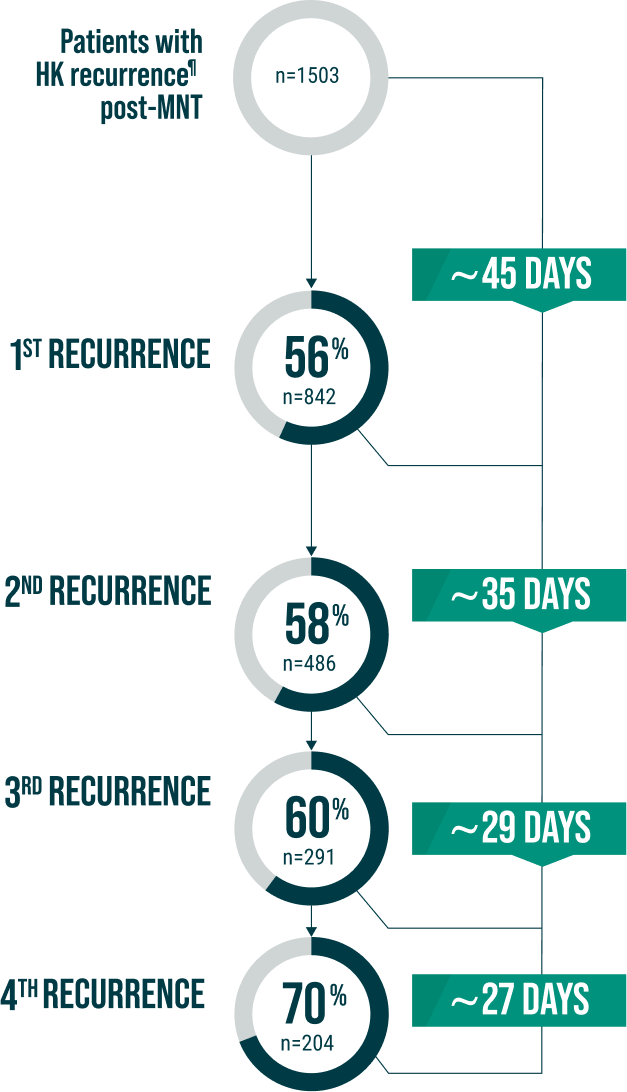
*Recurrent hyperkalemia was defined as a serum K+ >5.0 mEq/L that was at least 7 days apart from a prior lab evidence of hyperkalemia.1
KEY LIMITATIONS: The contents of standardized curriculums used during the MNT visit and adherence to the dietary counseling was unknown. The impact of other pharmacological therapy, including those used for inpatient management of acute hyperkalemia events that could have potentially affected K+ levels were not tracked, and patients were not censored if received. Causality cannot be inferred. The percentage of patients was calculated from the number of patients experiencing a recurrence in the preceding recurrent event group, not from the total patient population. For this reason, a patient might have been counted more than once in multiple groups.1
REVOLUTIONIZE I STUDY DESIGN: A retrospective, observational study of US EHR that evaluated the recurrence of hyperkalemia following an MNT visit within 30 days of lab-confirmed hyperkalemia diagnosis in adults with Stage 3 or 4 CKD between January 2019 and October 2022. The index date was the date corresponding to the date of MNT visit plus 7 days. Patients were followed up for 6 months post-MNT. Patients were censored when they died or initiated outpatient K+ binder. There were no pre-determined K+ serum monitoring levels. Hyperkalemia was ascertained from facility-based encounters or outpatient encounter study visits and K+ measurements between these encounters were unknown.1
In patients with CKD and HK,
The serious consequences of HK can cause disruptions in care2
In retrospective analyses:
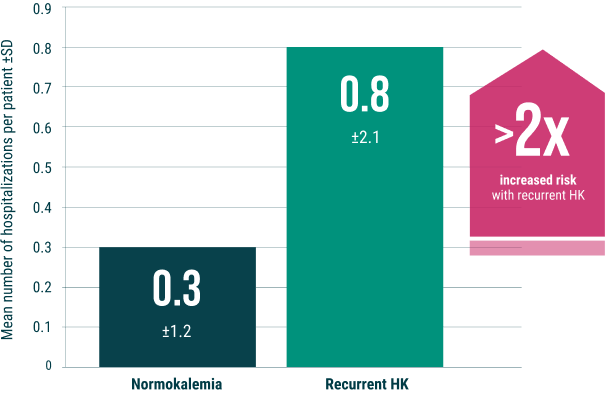
All-cause inpatient hospitalizations during 12-month follow-up in patients with Stage 3 or 4 CKD and recurrent HK† vs without HK‡ (n=4549 matched§ pairs)2
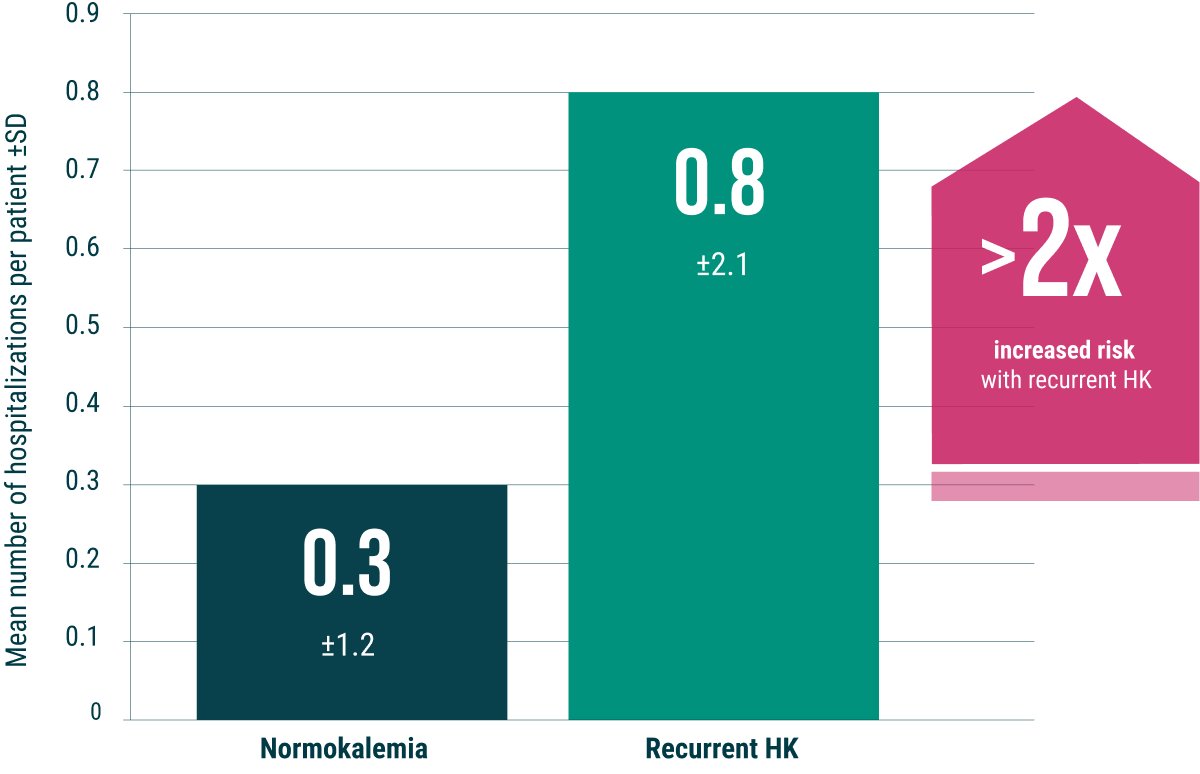
KEY LIMITATIONS: Given the definition of recurrent HK utilized, patients with an elevated K+ value without a diagnosis code for HK were not captured in the study. Residual confounding may be present due to unmeasured variables that cannot be ruled out. Results from the study may not be generalizable.2,3
†Patients with an index HK (≥1 HK diagnosis and ≥1 HK lab value within 7 days of each other) and an additional HK diagnosis or a serum K+ lab value >5.0 mEq/L during the 12-month baseline period.2,3
‡Patients with index normokalemia event (any K+ lab value 3.5—5.0 mEq/L) and no HK diagnosis or lab value <3.5 or >5.0 mEq/L during baseline or follow-up period.2,3
§Patients with recurrent HK were first matched to those without HK on: CKD Stage 3 or 4, RAASi use, CV events (MACE or MACE+, arrhythmia), HF, type I or II diabetes during baseline and 15-day post-index window, and Medicare medical coverage during baseline. A logistic regression model was then used to generate the propensity score.2
LOKELMA® (sodium zirconium cyclosilicate) is not indicated to reduce the risk of death or progression to ESKD or hospitalization.
REVOLUTIONIZE III was a retrospective cohort study of the US claims and EHR database comparing economic outcomes of matched patients with Stage 3 or 4 CKD with recurrent HK vs without HK from January 2016 to August 2022. Patients were followed from the index date of recurrent HK and without HK cohorts until time to death, end of data or enrollment, or ≥7 days of outpatient K+ binder use.2
Modifying RAASiǁ therapy can have consequences for your patients with HK (CKD subgroup analysis; n=11,873)4
In a retrospective analysis: Risk of progression to ESKD¶ with RAASiǁ modification in US patients with Stage 3 or 4 CKD and/or HF and HK4
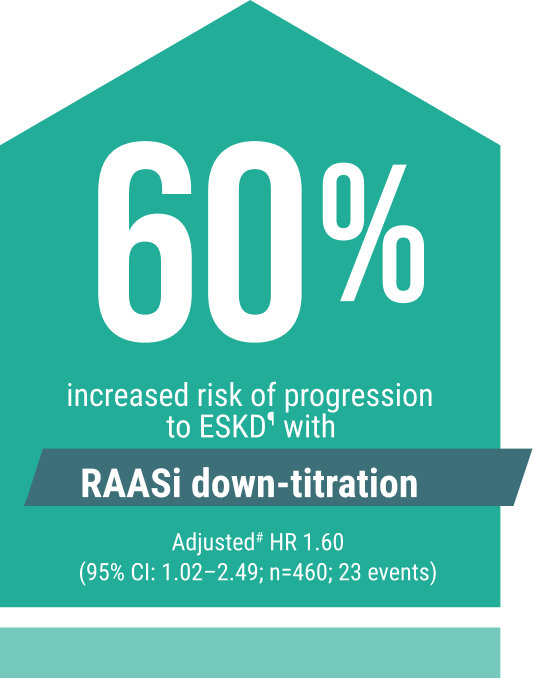
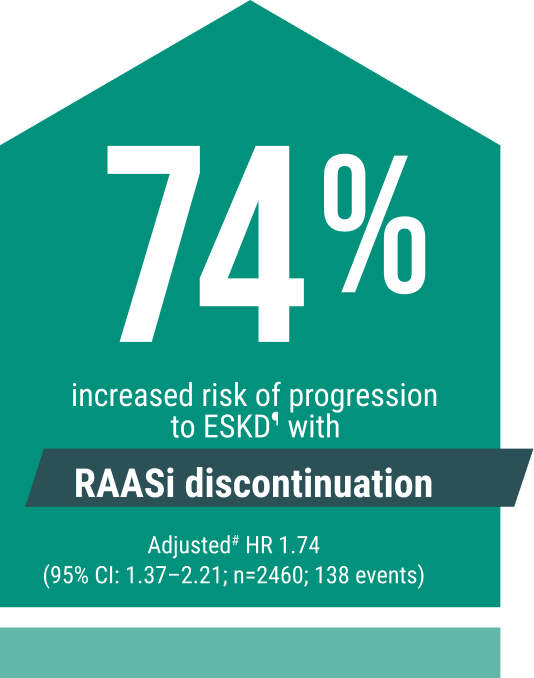
compared with patients who maintained or uptitrated RAASi dose (n=4586; 138 events)4
KEY LIMITATIONS: Information on race, certain risk factors, other comorbidities, and severity markers for CKD and HF were not available. The primary outcome did not account for mortality as a competing risk. A higher proportion of patients who discontinued or down-titrated RAASi therapy had severe index HK episode (K+ ≥6.0 mEq/L) and higher use of MRA at baseline. Patients who were hospitalized and died within 90 days were excluded, leading to an underestimation of the risk of outcomes.5
‖RAASi included ACEi, ARB, ARNI, and MRA. RAASi down-titration was defined as decrease in previously prescribed RAASi by >25% and discontinuation was defined as no fill of a new prescription within 90 days after index.5
¶Initiation of hemodialysis or a diagnosis of ESKD or CKD Stage 5 in any position recorded in hospital, emergency, or outpatient setting.5
#Adjusted for age, sex, history of HK, diabetes, HF, CKD including stage, and baseline use of RAASi.5
LOKELMA® (sodium zirconium cyclosilicate) is not indicated to reduce the risk of death or progression to ESKD or hospitalization.
ZORA was an observational analysis of US and Japan databases. For the US, data were retrieved from Optum’s de-identified Market Clarity Data between July 2019 and September 2021 in 15,488 adult patients with CKD Stage 3 or 4 and/or HF with an index HK episode (based on ICD codes) and ≥1 filled RAASi prescription within 6 months before index HK episode. Primary outcome evaluated the risk of ED visits or hospitalizations for HF or progression to ESKD (initiation of HD or a diagnosis of ESKD or Stage 5 CKD) in patients who discontinued or down-titrated RAASi compared to those who maintained or uptitrated RAASi following index HK episode. Data represent a subgroup of 11,873 patients with CKD (diagnosis code or eGFR) who were evaluated following an index HK episode.4,5
In an observational study of Stockholm-based patients who initiated MRA and developed HK** (n=1761)6
 47%
47%of patients discontinued†† MRA (n=827)


Once discontinued,
 74%
74%were not reintroduced to MRA therapy during the subsequent year
KEY LIMITATIONS: Residual confounding may exist due to unmeasured variables, such as: body mass index, blood pressure or smoking habits, ejection fraction in heart failure patients, and information on dietary interventions to control K+ intake. MRA use was based on MRA purchases and there was no confirmation on actual amount of medication taken. Causality cannot be inferred.6
**First-detected HK episode (K+ >5.0 mmol/L), following initiation of MRA therapy.6
††Absence of subsequent MRA purchase or MRA purchase occurring >30 days from the estimated pill supply.6
STUDY DESIGN: Observational, descriptive study utilizing Stockholm CREAtinine Measurements (SCREAM) project data to assess the 1-year incidence and clinical predictors of HK as well as the clinical management of HK by quantifying drug prescription changes after an episode of HK in 13,726 adults not on dialysis that initiated MRA therapy (no previous dispensation recorded of spironolactone and eplerenone) and had an index HK event between January 2007 to December 2010. A comparison cohort of new users of beta blockers was propensity score matched 1:1 to new MRA users to assess difference of incidence of HK. The MRA treatment lengths and dosages were ascertained by pharmacy dispensations. Majority (99%) of patients were dispensed spironolactone and the remaining (<1%) eplerenone, and most common comorbidities included HTN (64%), followed by HF (46%). Following HK, MRA was reduced in 5% of the population, with the remainder continuing the same dose.6
CHOOSE LOKELMA for rapid and sustained reductions in serum K+ levels
EXPLORE CLINICAL DATA